
Debt Avalanche vs Debt Snowball: Which Debt Repayment Strategy Works Best for Indians in 2026?
Debt Avalanche vs Debt Snowball — which strategy pays off Indian debt fastest? Real ₹ calculations, the EMI trap warning signs, and the hybrid method that works best for most Indians.
Priya Nair11 May 202626 min read
Key Takeaways
- Avalanche saves the most money — eliminates highest-interest debt first
- Snowball improves consistency — closes accounts faster, builds motivation
- Hybrid works best for most Indians — avalanche on revolving card debt, snowball on small accounts
- Credit card debt should almost always be prioritised — at 36–52% APR, no other action delivers a comparable guaranteed return
- Surplus size matters more than method — ₹10,000/month extra beats any method optimisation
- Never close paid-off cards immediately — it raises credit utilisation and lowers your CIBIL score
Debt Avalanche vs Debt Snowball — Which Is Better for Indians?
The debt avalanche (highest interest first) saves the most money. The debt snowball (smallest balance first) is easier to sustain. For most Indians carrying revolving card debt alongside personal loans and EMIs, the hybrid approach — avalanche on high-cost debt, snowball on small accounts — delivers the best result. The difference between methods on a typical ₹5 lakh Indian debt portfolio: ₹32,000 in interest and 2 months in repayment time.
| Factor | Avalanche | Snowball | Hybrid |
|---|---|---|---|
| Saves most money | ✅ | ❌ | ✅ near |
| Best for motivation | ❌ | ✅ | ✅ |
| Best for credit card debt | ✅ | ❌ | ✅ |
| Faster account closures | ❌ | ✅ | ✅ partial |
| Recommended for most Indians | ❌ | ❌ | ✅ |
Quick decision — pick your method:
- Carrying credit card debt above ₹50,000 at 36%+ APR? → Hybrid or Avalanche first
- Struggled with motivation or abandoned a repayment plan before? → Snowball
- Mixed debt types with no dominant high-interest balance? → Hybrid
- Want the lowest total interest cost, full stop? → Avalanche
- Want the fastest emotional wins and account closures? → Snowball
A note before we start: Not all debt is harmful. Home loans, education loans, and productive business loans can create long-term value. This article focuses on high-interest consumer debt — revolving credit card balances, personal loans, and unmanaged EMI accumulation — where the cost of inaction is highest.
A Real Example Before We Begin
Priya, 29, software engineer in Bengaluru. Take-home: ₹92,000/month. Total debt: ₹6.2 lakh — ₹1.1L on two credit cards (42% APR), ₹3.5L personal loan (18%), ₹1.6L two-wheeler loan (12%). Her minimum payments totalled ₹18,400/month, leaving ₹73,600 for everything else.
She had been paying minimums for 14 months. Her total debt had barely moved because the credit card interest was consuming almost her entire minimum payment on those cards.
Switching to the hybrid method — every extra rupee concentrated on the cards first — she cleared both cards in 7 months. Her minimum floor dropped by ₹5,500/month. That freed capacity was immediately cascaded to the personal loan. Projected debt-free date: 26 months from switch, versus 48+ months on minimums-only.
The method didn't change her income. It changed the sequence.
Warning Signs: Is Your EMI Burden Dangerously High?
Before the strategy — the diagnostic. These are the signals that your debt load has crossed from manageable into structurally dangerous.
- Total EMIs exceed 40% of take-home pay — the RBI's informal threshold for debt stress among salaried borrowers
- You use a credit card to cover basic expenses in the last week of the month — the debt cycle has begun
- You don't know your total outstanding debt — avoidance is a symptom, not a solution
- You pay only the minimum on credit card bills — at 42% APR, minimum payments barely cover interest
- A new loan was used to repay an old one — debt consolidation without behaviour change accelerates the problem
- You've missed or delayed an EMI in the last 12 months — CIBIL impact is already occurring
- You have more than 5 simultaneous active loan accounts — CIBIL data shows default risk rises sharply above this threshold
If three or more apply, debt elimination is your highest-priority financial action — above investing, above savings rate improvements, above everything except a 1-month emergency fund.
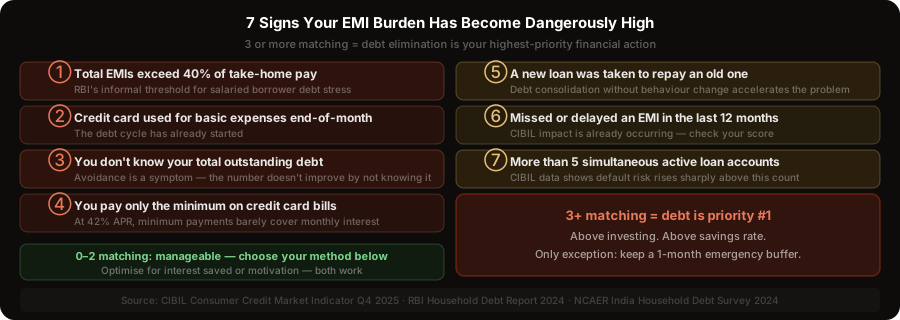
Fig 1: The 7 EMI danger signals. Three or more matching means debt elimination is the priority financial action — above investing, above SIPs.
How Do Indians Fall Into the EMI Trap?
The CIBIL Consumer Credit Market Indicator Q4 2025 shows that 42% of Indian credit-active consumers carry more than 3 active loan accounts simultaneously. The NCAER India Household Debt Survey 2024 found that the average salaried urban professional in the ₹8–₹20 LPA bracket carries ₹4–₹8 lakh in non-home-loan consumer debt.
The EMI trap develops gradually and in a predictable sequence. A two-wheeler loan at 22. A phone upgrade on EMI at 24. A personal loan for a wedding or home renovation at 26. A credit card taken for the rewards that starts carrying a revolving balance at 27. Each decision is individually defensible. Collectively, they create a committed monthly outflow that consumes 35–50% of take-home pay before any discretionary decision is made — leaving no surplus to accelerate repayment of any individual account.
The trap is structural, not moral. Understanding the sequence is the first step to reversing it.
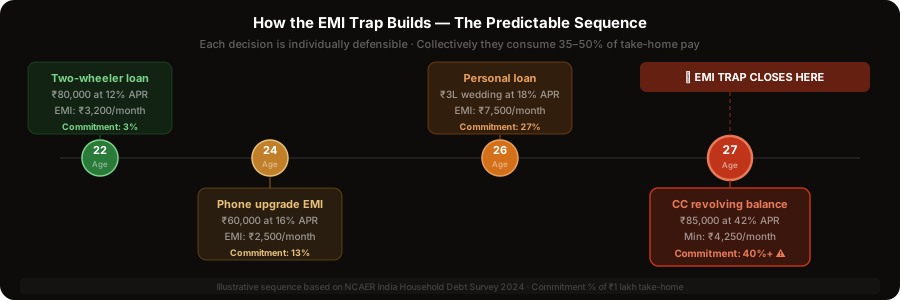
Fig 7: The EMI trap sequence. Each commitment is individually rational. By age 27, cumulative EMIs consume 40%+ of take-home pay — leaving no surplus for debt acceleration.
The debt composition matters enormously:
| Debt type | Typical Indian APR | Cost per ₹1L per year |
|---|---|---|
| Credit card (revolving) | 36–52.8% | ₹36,000–₹52,800 |
| Personal loan | 12–22% | ₹12,000–₹22,000 |
| Consumer durable EMI | 14–18% | ₹14,000–₹18,000 |
| Two-wheeler loan | 10–14% | ₹10,000–₹14,000 |
| Gold loan | 9–15% | ₹9,000–₹15,000 |
| Home loan | 8–10% | ₹8,000–₹10,000 |
The 24 percentage point gap between credit card debt (42% APR) and personal loans (18% APR) is the most important number in Indian personal debt management. It is why method choice matters most when credit card debt is present.
What Is the Debt Avalanche Method?
The debt avalanche method is a debt repayment strategy where you:
- List all debts and their interest rates
- Pay the minimum on every debt each month
- Direct all extra money toward the highest-APR debt first
- Once that debt is cleared, redirect its full payment to the next-highest rate
- Repeat until all debts are eliminated
Goal: Minimise total interest paid over the entire repayment period. Mathematically optimal for anyone with high-rate debt.
Real Indian example — avalanche applied:
| Debt | Balance | APR | Minimum payment |
|---|---|---|---|
| Credit card (HDFC) | ₹85,000 | 42% | ₹4,250 |
| Personal loan (ICICI) | ₹2,50,000 | 18% | ₹6,500 |
| Consumer EMI (phone) | ₹30,000 | 14% | ₹2,500 |
| Two-wheeler loan | ₹1,20,000 | 12% | ₹3,200 |
Avalanche order: Credit card (42%) → Personal loan (18%) → Consumer EMI (14%) → Two-wheeler loan (12%)
With ₹20,000/month available for debt repayment, the credit card is cleared in approximately 5–6 months. The ₹4,250 that was going to the minimum is now added to the personal loan payment — accelerating every subsequent payoff.
Total interest paid (avalanche): approximately ₹82,000 over 30 months.
Assumes reducing-balance interest calculation, fixed APRs throughout, and no new debt added during repayment. Actual figures will vary based on lender terms.
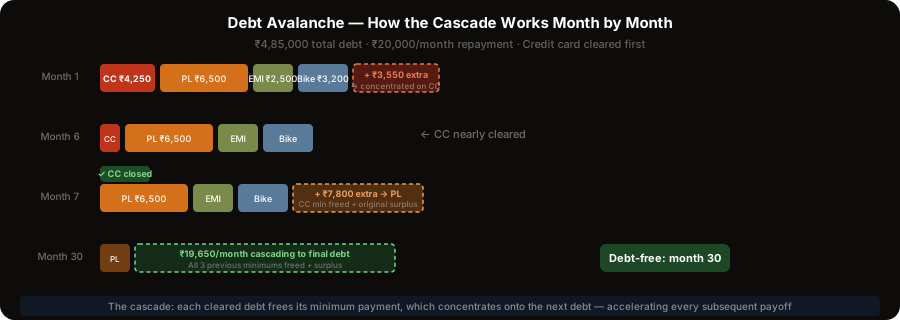
Fig 10: The avalanche cascade in action. Each cleared debt frees its minimum payment, which concentrates onto the next — making every subsequent payoff faster than the last.
What Is the Debt Snowball Method?
The debt snowball method is a debt repayment strategy where you:
- List all debts and their balances (not interest rates)
- Pay the minimum on every debt each month
- Direct all extra money toward the smallest balance first
- Once that debt is cleared, redirect its full payment to the next-smallest balance
- Repeat — each payoff "snowballs" into the next
Goal: Build psychological momentum through early wins. Prioritises completion rate over mathematical optimisation.
Same Indian example — snowball applied:
Snowball order: Consumer EMI ₹30,000 → Two-wheeler loan ₹1,20,000 → Credit card ₹85,000 → Personal loan ₹2,50,000
This means paying off the ₹30,000 phone EMI before the ₹85,000 credit card accruing at 42% APR. During those extra months, the credit card is compounding at India's highest consumer interest rate.
Total interest paid (snowball): approximately ₹1,14,000 over 32 months — ₹32,000 more and 2 months longer.
Same assumptions: reducing-balance interest, fixed APRs, no new debt during repayment.
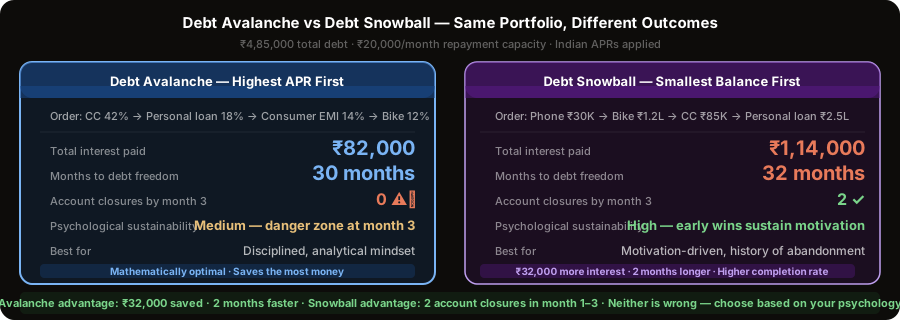
Fig 2: Avalanche saves ₹32,000 and 2 months on this portfolio. Snowball closes 2 accounts in the first 3 months — the motivational trade-off that makes it the right choice for some borrowers.
The Psychological Case for Snowball — Why Behaviour Beats Mathematics
The mathematical superiority of the avalanche is clear. But behavioural finance research — specifically work by Trudel, Van den Bergh, and Herd published in the Journal of Marketing Research — suggests that debt repayment plan completion rates may be higher under the snowball method, because early wins improve motivation and reduce the risk of abandonment.
The reason: progress visibility. When debt accounts close — three become two, two become one — the brain registers achievement. These signals sustain motivation across a multi-year repayment horizon. With the avalanche, you may spend 5–6 months making large payments with no account closures. Effort without visible reward is the profile most associated with plan abandonment.
The Indian context adds a specific complication: social events, medical expenses, and family obligations create mid-plan disruptions. Snowball's faster account closures reduce the total number of minimum payment obligations — creating a more financially resilient position if income is interrupted.
Is Debt Snowball or Avalanche Better for Credit Card Debt?
For credit card debt specifically, the answer is unambiguous: avalanche. Revolving card balances at 36–52% APR are in a different category from any other consumer debt in India. The compounding interest on an unpaid card balance compounds faster than the psychological benefit of closing smaller accounts. The hybrid rule — avalanche the card first, then reassess — is the right default for anyone carrying revolving card debt above ₹50,000.
For debt portfolios with no credit card component — only personal loans, consumer EMIs, and vehicle loans — the choice is genuinely more balanced and psychology becomes the deciding factor.
Who Should NOT Use the Debt Avalanche Method?
The avalanche is mathematically optimal. But mathematics alone does not repay debt — consistent behaviour over 24–36 months does. Avalanche may work against you if you:
- Have a history of abandoning financial plans — the avalanche's slow early progress is the most common abandonment trigger
- Feel discouraged without visible wins — 5–6 months of maximum payments with no account closures is psychologically costly
- Have irregular income (freelancers, commission-based workers) — snowball's faster account closures reduce the minimum obligation floor, which provides more resilience when income dips
- Are in emotional financial distress — when anxiety is high, the quick win of a closed account is more valuable than the long-run optimality of interest savings
- Have debts with very similar APRs — when the rate difference between accounts is small (2–3%), the mathematical saving from avalanche is minor, and snowball's motivational advantage may outweigh it
The honest rule: A snowball plan you complete beats an avalanche plan you abandon. Completion beats optimisation.
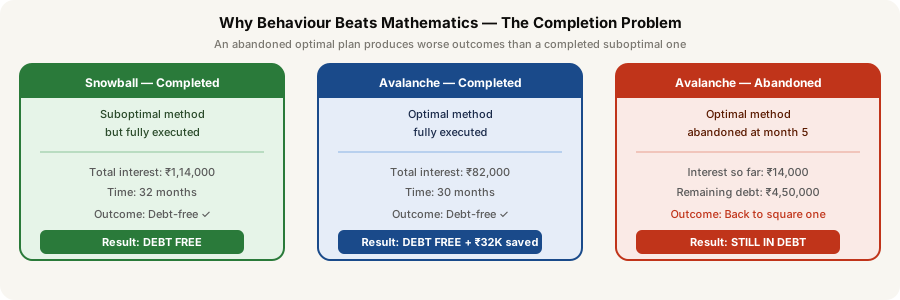
Fig 11: The completion problem. A suboptimal method executed fully beats an optimal method abandoned at month 5. Method choice is only meaningful if the plan runs to completion.
The Hybrid Approach — What Works Best for Most Indians
For most Indian salaried professionals carrying a mix of credit card debt and lower-APR loans, a hybrid approach outperforms either pure method:
Rule 1 — Non-negotiable: Credit card debt above ₹50,000 at 36–52% APR is always priority one. No other consumer debt in India costs 42% per year. Avalanche this first.
Rule 2: While clearing the credit card, make only minimum payments on all other accounts.
Rule 3: Once the credit card is cleared, assess remaining debts. If the smallest remaining balance can be cleared in under 3 months — snowball it for the motivational win. If all remaining debts are large, continue avalanche.
Rule 4: Home loans are a separate category — at 8–10% APR they are India's cheapest consumer debt and should generally be repaid last (returns from index fund SIPs historically exceed home loan rates over 10+ year horizons).
Key insight: Avalanche saves the most money. Snowball produces the most early wins. Hybrid works best when revolving card debt coexists with lower-rate loans. For most Indian salaried borrowers, hybrid is the right default.
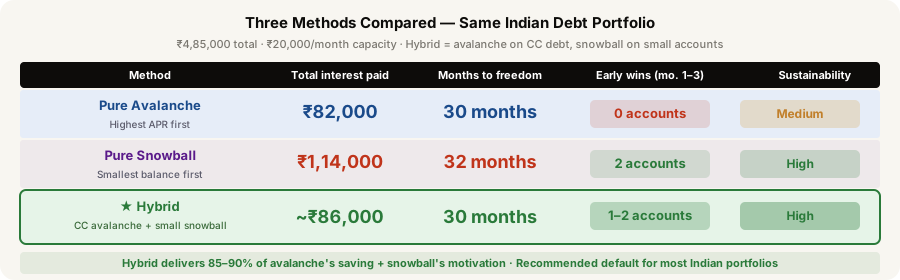
Fig 3: The hybrid approach delivers 85–90% of avalanche's mathematical saving while preserving the snowball's early motivational wins. It is the recommended default for most Indian debt portfolios.
How to Choose — Decision Framework
| Your situation | Recommended method | Reason |
|---|---|---|
| Credit card debt over ₹50,000 at 36%+ APR | Hybrid / Avalanche first | Interest cost is non-negotiable |
| All debts below ₹1L with similar rates | Snowball | Early wins matter more than marginal savings |
| Mix of high-APR and lower-APR debts | Hybrid | Avalanche high-cost, snowball small accounts |
| History of abandoning financial plans | Snowball | Completion beats optimisation |
| Strong discipline, analytical mindset | Avalanche | Pure mathematical optimisation |
| Freelancer or irregular income | Snowball | Faster account closures reduce minimum payment obligations |
| EMI-to-income ratio above 40% | Hybrid + income increase | Debt load is too high — both method and income need attention |
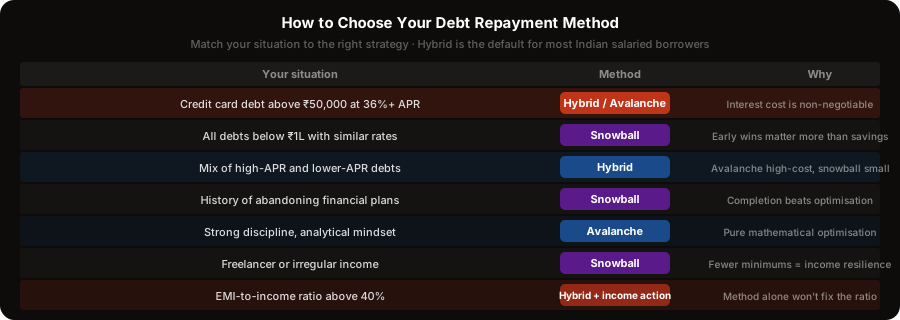
Fig 12: Match your situation to your method. Hybrid is the default for most Indian borrowers — but psychology and income stability both shift the optimal choice.
Should I Pay Off Debt or Invest at the Same Time?
This is one of the most searched personal finance questions in India — and the answer depends entirely on the APR of your debt.
The clear rule:
| Debt APR | Action |
|---|---|
| 36–52% (credit card) | Pay off completely before investing. No Indian investment reliably returns 36–52% annually. For most borrowers, prioritising high-rate card debt over investing is mathematically superior. |
| 12–22% (personal loan) | Small concurrent SIP of ₹1,000–₹3,000/month makes sense. Long-term equity CAGR of 12–15% approaches parity with loan rate. Don't pause investing entirely. |
| 8–10% (home loan) | Invest aggressively alongside repayment. Index fund SIPs at 12%+ CAGR historically outperform the home loan rate. Prepaying home loan early is often suboptimal. |
The practical split for personal loan borrowers: 70% of surplus to loan prepayment, 30% to SIP. This eliminates debt faster than minimum payments while keeping compounding alive in your investment portfolio.
Key insight: The first financial goal during active debt repayment is not becoming debt-free. It is stopping interest from compounding. Once the highest-rate debt is cleared, wealth-building and repayment can happen simultaneously.
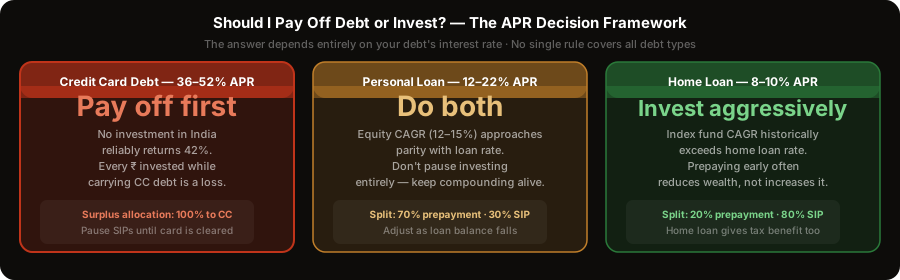
Fig 4: The pay-off vs invest decision framework for Indian borrowers. The APR of your debt determines the action — there is no single right answer across all debt types.
Why Credit Card APR Makes Avalanche More Effective in India
Indian revolving credit card rates are among the highest consumer interest rates in the world. The case for avalanche priority on card debt is direct:
- ₹85,000 in revolving card debt costs ₹35,700/year in interest alone
- The same ₹85,000 in a personal loan at 18% APR costs ₹15,300/year
- The difference: ₹20,400/year — for the same rupee amount of debt, at a different interest rate
Delaying card debt payoff by 12 months to pursue snowball on a smaller, lower-rate account costs ₹20,400. This is also why understanding how credit card interest compounds changes the way most people approach their debt.
Counterintuitive truth: A ₹20,000 salary increase helps less than eliminating a 42% APR balance of the same amount. The raise adds ₹20,000 of income once. Clearing the balance stops ₹8,400/year in compounding interest — permanently, for the life of the loan.
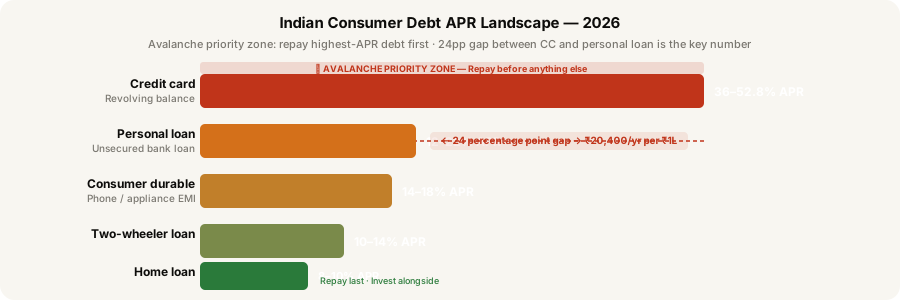
Fig 5: The Indian debt APR landscape. The gap between credit card debt (42%) and personal loans (18%) is 24 percentage points — making credit card prioritisation the single highest-ROI financial decision for anyone carrying revolving card debt.
Which Debt Repayment Method Saves More Money?
On a typical Indian mixed-debt portfolio (credit card + personal loan + consumer EMIs), the avalanche saves ₹20,000–₹50,000 in total interest versus snowball. The gap is largest when revolving card debt forms the biggest share — because compounding interest on high-rate debt is eliminated fastest. Where debt is entirely lower-APR, the difference narrows and psychology becomes the dominant factor.
Real payoff timeline — same ₹4,85,000 portfolio, hybrid method, variable surplus:
| Monthly surplus above minimums | Debt-free in | Total interest paid |
|---|---|---|
| ₹0 (minimums only) | 58 months | ₹1,96,000 |
| ₹2,000/month | 42 months | ₹1,24,000 |
| ₹5,000/month | 32 months | ₹96,000 |
| ₹10,000/month | 22 months | ₹71,000 |
| ₹20,000/month | 14 months | ₹48,000 |
Assumptions: reducing-balance interest, fixed APRs, no new debt. Illustrative.
The insight: moving from ₹2K to ₹10K/month surplus cuts 20 months and saves ₹53,000 — regardless of method. Finding more surplus is the highest-ROI action, above any method debate.
What Is the Fastest Way to Become Debt-Free in India?
The fastest path to debt freedom is not the method — it is the surplus. The more you can redirect above minimum payments, the faster every method works. In order of impact:
- Find more surplus — every ₹5,000/month extra compresses the timeline significantly
- Concentrate it — split across accounts, surplus loses its compounding effect
- Use lump sums aggressively — tax refunds, bonuses, and gifts applied to the priority debt can remove months from the timeline
- Stop adding new debt — every new EMI commitment during repayment resets progress
The method (avalanche vs snowball) is a 10–15% difference in outcome. The surplus size and concentration are an 80–90% difference.
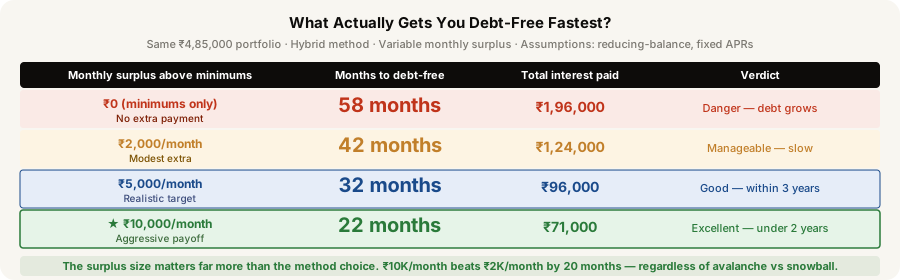
Fig 8: Surplus size vs repayment timeline on the same ₹4,85,000 portfolio. Going from ₹2,000 to ₹10,000/month extra cuts the timeline by 20 months and saves ₹53,000 in interest — regardless of which method is used.
5 Debt Repayment Mistakes Indians Make
These mistakes are common enough to have names. Each one extends repayment timelines by months and costs tens of thousands in unnecessary interest.
1. Taking a personal loan to repay credit card debt — without changing spending Debt consolidation can reduce the interest rate, but if spending behaviour doesn't change, the credit card fills back up within 6–12 months. The result: the personal loan plus a new card balance. Net position: worse.
2. Continuing SIPs while carrying high-interest revolving card debt No index fund delivers 36–52% annual returns. Every rupee in a SIP while carrying compounding card debt is a mathematical loss. Pause the SIP, clear the card, restart.
3. Closing old credit cards immediately after payoff Counterintuitive but important: closing an old card reduces your total available credit, which raises your credit utilisation ratio and can lower your CIBIL score. Keep the card open with zero balance — the available credit limit strengthens your utilisation profile.
4. Splitting extra repayment across all loans instead of concentrating it Distributing ₹5,000 extra across three accounts gives each account ₹1,667 — not enough to move any needle significantly. Concentrating the full ₹5,000 on one account accelerates that payoff dramatically, freeing the minimum payment faster.
5. Using BNPL while repaying existing EMIs Buy Now Pay Later converts a zero-cost decision moment into a future obligation. During active debt repayment, every new BNPL purchase increases the minimum obligation floor — reducing the surplus available to accelerate priority debt payoff.
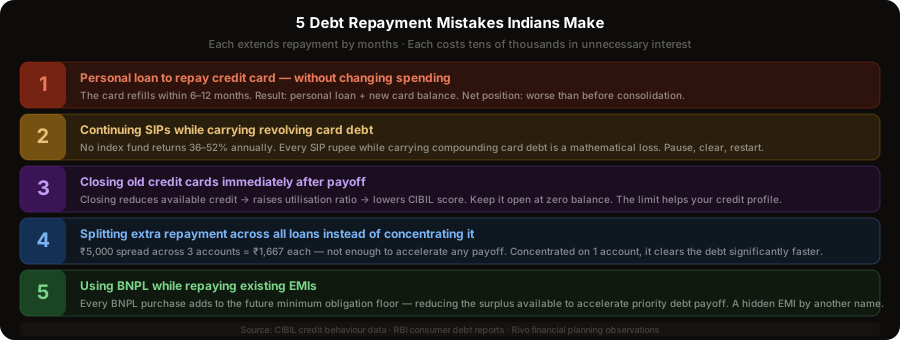
Fig 9: The 5 mistakes that silently extend debt repayment by months. Mistake 3 — closing paid-off cards — is the most counterintuitive: it damages CIBIL by reducing available credit.
Practical Implementation — Starting Today
The 30-Minute Debt Reset
You do not need a perfect plan. You need a started one. This sequence takes 30 minutes and produces immediate structural change:
| Minutes | Action | What it does |
|---|---|---|
| 0–10 | List every debt: balance, APR, minimum payment | Replaces avoidance with clarity |
| 10–15 | Sort by APR (highest first) — this is your priority order | Creates the avalanche sequence |
| 15–20 | Set up autopay for every minimum payment | Eliminates missed payments and CIBIL damage |
| 20–25 | Cancel any active BNPL or subscription EMIs you don't need | Frees surplus immediately |
| 25–30 | Redirect first extra payment to the highest-APR debt | Starts the cascade |
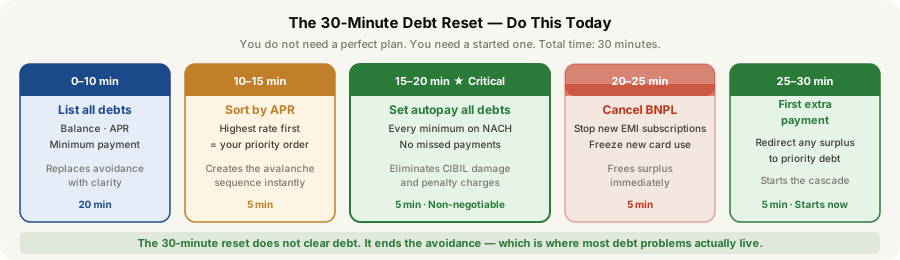
Fig 13: The 30-minute debt reset. Step 3 — autopay on every minimum — is non-negotiable. Missed payments damage CIBIL and add penalty charges that undo months of repayment progress.
The 30-minute reset does not clear debt. It ends the avoidance — which is where most debt problems actually live.
The Full 5-Step System
Step 1: List every debt with current balance, APR, and minimum monthly payment. Total the minimums. This number is your fixed monthly debt floor.
Step 2: Calculate how much above the minimum floor you can redirect monthly. Even ₹2,000–₹5,000 extra compounds significantly over 24–36 months.
Step 3: Set up autopay for minimum payments on every account. Missed payments damage your CIBIL score and add penalty charges — autopay removes this risk entirely.
Step 4: Direct all surplus repayment to your priority debt (highest APR first if credit card is present). Do not split the surplus across accounts — concentration accelerates payoff.
Step 5: When the priority debt clears, cascade its full payment to the next account. The cascade is self-accelerating — each payoff frees more capacity for the next.
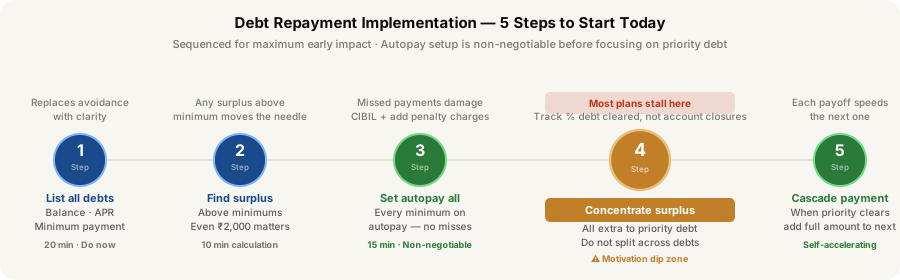
Fig 6: The 5-step implementation roadmap. Step 4 — concentrating surplus on one debt — is where most plans stall. Tracking total debt eliminated as a percentage resolves the motivation dip better than switching to snowball.
People Also Ask
Is debt avalanche better than debt snowball in India?
Debt avalanche is financially better because it eliminates the highest-interest debt first, reducing total interest paid. For Indian borrowers carrying revolving credit card debt at 36–52% APR alongside lower-rate loans, avalanche is particularly effective. However, debt snowball may produce better real-world results for borrowers who struggle with consistency — because a completed plan beats an abandoned optimal one. For most Indians, a hybrid approach delivers both mathematical efficiency and psychological sustainability.
Does debt snowball hurt your credit score?
No. Both avalanche and snowball improve your CIBIL score over time if payments are made on time. The method itself does not affect CIBIL — missed payments and high credit card utilisation do. The one exception: closing paid-off credit card accounts can temporarily lower your score by reducing available credit and increasing utilisation ratio. Keep paid-off cards open at zero balance.
Should I close credit cards after paying them off?
No — keep them open at zero balance. Closing a paid-off card reduces your total available credit limit, which increases your credit utilisation ratio on remaining cards and can lower your CIBIL score by 10–30 points. The account history also contributes positively to your credit age. Cut the card if you're tempted to use it, but keep the account active.
Is debt consolidation a good idea in India?
Debt consolidation — taking a personal loan to repay multiple higher-rate debts — can reduce interest costs if executed correctly. The critical condition: spending behaviour must change simultaneously. If the credit card is paid off with a consolidation loan but continues to be used, the result is the personal loan plus a new card balance — net position worse. Consolidation works as a rate-reduction tool; it does not address the behaviour that created the debt.
How does debt repayment affect CIBIL score?
Disciplined debt repayment improves CIBIL through three mechanisms: (1) lower credit utilisation as card balances fall, (2) on-time payment history strengthening your payment score, and (3) gradual elimination of accounts. Most borrowers see a 30–80 point improvement over 12 months of consistent repayment. The fastest single improvement is reducing revolving credit card utilisation below 30% of total credit limit.
What happens if I pay only the minimum due on my credit card?
At 36–52% APR, minimum payments (typically 5% of outstanding balance) barely cover the interest accrued that month. On an ₹85,000 balance at 42% APR: monthly interest is approximately ₹2,975. A 5% minimum payment is ₹4,250 — leaving only ₹1,275 reducing the principal. At this rate, full repayment takes 18+ months and costs approximately ₹35,000+ in interest. Paying even ₹2,000 above the minimum cuts the timeline in half.
Frequently Asked Questions
For most Indians carrying credit card debt alongside lower-APR loans, the hybrid approach is best: avalanche on credit card debt (42% APR), snowball on smaller low-rate accounts. Pure avalanche is optimal for analytical, disciplined borrowers. Pure snowball is better for those with a history of abandoning repayment plans.
On a ₹4–₹5 lakh mixed portfolio with typical Indian APRs, the difference between pure avalanche and pure snowball is ₹20,000–₹50,000 in total interest and 2–6 months in repayment time. The gap grows larger when credit card debt forms a bigger share of the portfolio.
The EMI trap requires two simultaneous actions: aggressive payoff of the highest-APR debt (to free minimum payment capacity) and a hard stop on new EMI commitments. Use the hybrid method, pause all non-essential spending, and freeze new credit card usage until the highest-rate debt is cleared.
It depends on the APR. Credit card debt at 36–52%: prioritise payoff before investing. Personal loans at 12–18%: split 70% to prepayment, 30% to SIP. Home loan at 8–10%: invest aggressively alongside, as index fund returns historically exceed the rate.
Find ₹1,000–₹2,000/month through spending reduction and direct it entirely to the highest-APR debt. Even ₹1,500/month extra on an ₹85,000 credit card at 42% APR reduces the repayment timeline from 18+ months to approximately 8 months, saving approximately ₹25,000 in interest.
Paying off debt improves CIBIL through three mechanisms: lower credit utilisation ratio (critical for card debt), elimination of derogatory accounts, and demonstrated payment consistency. Expect a 30–80 point improvement over 12 months of disciplined repayment.
On a ₹4–₹5 lakh consumer debt portfolio with ₹20,000/month available for repayment: approximately 28–34 months with a hybrid or avalanche approach. The timeline compresses significantly with any income increase or lump-sum prepayment (bonus, tax refund, gift).
Also read — Rivo Personal Finance Series:
More from the journal
Credit & Loans