
Premium Credit Cards India 2026: Honest ROI Review of Infinia, Magnus, Amex Platinum & Diners Black — Are They Worth ₹10,000–₹60,000?
Premium credit cards India 2026 — honest ROI review of HDFC Infinia Metal, Amex Platinum, Axis Magnus, and Diners Black. Real break-even calculations, devaluation risks, and who should NOT apply. Updated May 2026.
Priya Nair8 May 202618 min read
Table of Contents
- The Only Question That Matters: Does the Fee Pay for Itself?
- Quick Comparison: Top Premium Cards India 2026
- Full Reviews
- The Lounge Problem in India 2026
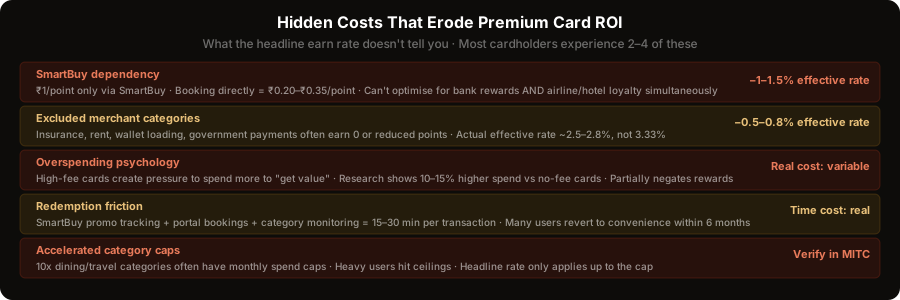
- Hidden Costs Most Premium Card Users Ignore
- Which Premium Card Fits Your Lifestyle?
- Premium Cards vs Mid-Tier Cards
- The Biggest Risk: Devaluation
- The Truth Most People Realise Too Late
- Application Difficulty
- Best Alternatives If You Don't Qualify
- Cards That Are NOT Worth It in India 2026
- Frequently Asked Questions
Key Takeaway:
Premium cards only make financial sense at ₹1.5–₹2L+/month spend. Below this, the HDFC Regalia Gold Credit Card at ₹2,500 delivers 70–80% of premium card value at 20% of the fee. The biggest risk in 2026 is devaluation — Axis Bank Magnus lost its milestone bonus, hotel partners, and saw transfer ratios halved across three rounds of cuts in 24 months. HDFC Infinia Metal and HDFC Diners Club Black have the most stable value propositions in 2026.
Quick answer — premium credit cards worth their annual fee in India 2026: Best overall: HDFC Infinia Metal Credit Card by HDFC Bank (₹12,500 fee, ₹1/point via SmartBuy, unlimited Priority Pass globally). Best for dining + travel: HDFC Diners Club Black Credit Card by HDFC Bank (₹10,000 fee, 10x on dining/travel, 3.33% effective). Best for lounge access: Axis Bank Magnus Credit Card by Axis Bank (₹12,500 fee, unlimited lounge + 4 guest visits — note: significantly devalued in 2023–26). Best lifestyle + concierge: American Express Platinum Card (₹60,000 fee, only for ₹5L+/month spenders).
The Only Question That Matters: Does the Fee Pay for Itself?
Premium cards are financial tools — and like any tool, they either deliver positive ROI or they don't.
The break-even formula:
Monthly spend required to break even = Annual fee ÷ (Effective earn rate × 12)
| Card | Annual Fee | Earn Rate | Break-Even Monthly Spend |
|---|---|---|---|
| HDFC Infinia Metal (HDFC Bank) | ₹12,500 | 3.33% | ₹31,270 |
| HDFC Diners Black (HDFC Bank) | ₹10,000 | 3.33% (dining/travel) | ₹25,025 (dining only) |
| Axis Magnus (Axis Bank) | ₹12,500 | ~3.0% | ₹34,722 |
| Amex Platinum (Amex India) | ₹60,000 | Variable | ₹75,000+ (with full benefit extraction) |
At break-even, the card has paid for itself through rewards alone — before counting lounge access, concierge value, hotel memberships, or welcome benefits.
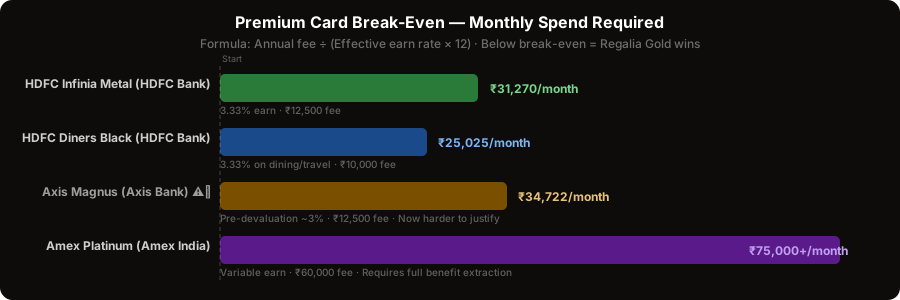 Fig 1: Premium card break-even spending thresholds. HDFC Diners Club Black has the lowest break-even at ₹25,025/month. Amex Platinum requires ₹75,000+/month in extractable value to justify its ₹60,000 fee.
Full Reviews: Premium Credit Cards India 2026
#1 — HDFC Bank Infinia Metal Edition
Score: 9.6 / 10 | India's Best Premium Credit Card 2026
| Feature | Details |
|---|---|
| Annual Fee | ₹12,500 |
| Reward Rate | 5 points per ₹150 = 3.33% effective |
| Point Value | ₹1 per point via SmartBuy — highest in India |
| Lounge Access | Unlimited Priority Pass globally — cardholder + add-on member |
| Golf | 30+ courses across India |
| Concierge | 24/7 dedicated lifestyle desk |
| Hotel Memberships | Club Marriott + ITC Hotels |
| Min. Monthly Income | ₹3,00,000+ |
| Availability | Largely invitation-only (requires HDFC Imperia relationship) |
| Issuing Bank | HDFC Bank |
Why it's #1: No other Indian credit card delivers ₹1/point redemption value across the broadest range of spend categories. The 3.33% effective earn rate covers dining, travel, groceries, and most everyday categories — making it the strongest all-round premium earner in India. Combined with unlimited global Priority Pass access for the cardholder and add-on member, this card generates ₹1.5 lakh+ in annual value at ₹3L/month spend.
Pros: ₹1/point is the highest reward value of any Indian bank card. 3.33% effective on a broad range of categories (verify current exclusions on HDFC Bank MITC — some categories such as rent, insurance, and wallet loading may earn lower or no rewards). Unlimited Priority Pass globally for cardholder + add-on member. Hotel and lifestyle memberships add ₹25,000+ standalone value.
Cons: Invitation-only — requires existing HDFC Imperia/Private Banking relationship. ₹1/point ONLY via SmartBuy — direct statement credit redemption is lower. At below ₹2L/month spend, the fee is hard to justify vs HDFC Regalia Gold.
Who should NOT get this card: Monthly spenders below ₹1.5L (HDFC Regalia Gold Credit Card delivers 80% of the value at ₹2,500 fee), anyone without an HDFC Bank relationship (invitation barrier is real), users who plan to redeem points against merchandise (the ₹1/point value only materialises via SmartBuy flight/hotel bookings).
Real-world ROI at ₹3,00,000/month — three scenarios:
| Value tier | What it assumes | Annual benefit |
|---|---|---|
| Conservative | Points redeemed at ₹0.50/pt, 12 lounge visits, no hotel stays | ~₹65,000–₹75,000 |
| Realistic active user | SmartBuy used consistently, 18 lounges, one hotel membership used | ~₹90,000–₹1,20,000 |
| Maximum optimizer | SmartBuy promotions tracked, 24 lounges, both hotel memberships extracted | ~₹1,50,000+ |
Fee: ₹12,500. Even the conservative scenario delivers a 5–6x ROI.
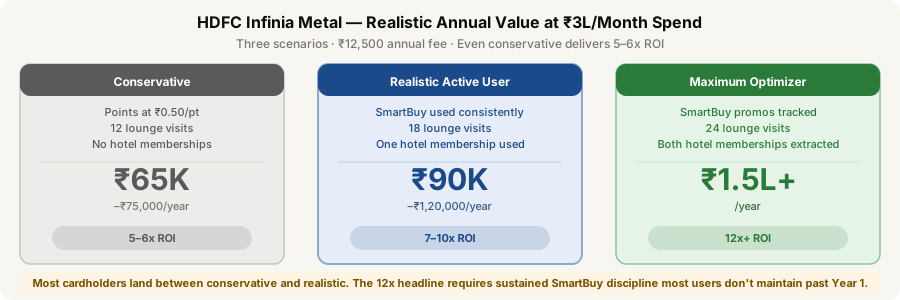 Fig 2: HDFC Infinia Metal realistic annual value at ₹3L/month spend. The conservative scenario still delivers 5–6x ROI on ₹12,500 fee. Maximum optimizer returns require sustained SmartBuy discipline most cardholders don't maintain.
#2 — HDFC Diners Club Black Credit Card (by HDFC Bank)
Score: 9.0 / 10 | Best Premium Card for Dining & Rewards
| Feature | Details |
|---|---|
| Annual Fee | ₹10,000 (waived at ₹5L annual spend) |
| Dining & Travel Rewards | 10x reward points |
| All Other Spends | 5x reward points |
| Point Value | ₹1 per point via SmartBuy |
| Effective Earn Rate on Dining | 3.33% |
| Lounge Access | Unlimited (Diners Club network globally) |
| Min. Monthly Income | ₹1,75,000 |
| Issuing Bank | HDFC Bank |
One-line verdict: India's best card for high-spend dining and travel — 3.33% effective on those categories beats any cashback card. The Diners Club acceptance gap at smaller restaurants is the only meaningful weakness.
Who should NOT get this card: Users whose dining spend is primarily through Swiggy/Zomato delivery (Axis Bank Ace at 4% beats Diners Black on apps), anyone who plans to redeem points against merchandise (the ₹1/point value requires SmartBuy redemption), monthly spend below ₹1.5L (the ₹10,000 fee isn't justified).
#3 — Axis Bank Magnus Credit Card (by Axis Bank)
Score: 7.2 / 10 | Premium Lounge Card — Significantly Devalued in 2023–26
Axis Bank Magnus has undergone three rounds of cuts since 2023. The monthly milestone bonus (the card's defining USP) was removed in 2024. Accor, Marriott Bonvoy, and Qatar Airways were removed from the Travel EDGE programme in April 2026 with zero notice. Transfer ratio is now 5:2 (down from 5:4). Year 2+ ROI at ₹2L/month is 1.4–1.6x — thin. Verify all current benefits on Axis Bank's official website before applying.
One-line verdict: Only for heavy lounge users flying 15+ times/year who specifically need unlimited guest access — and accept the post-devaluation miles value. For miles, HDFC Infinia Metal delivers better value per rupee.
#4 — American Express Platinum Card (by Amex India)
Score: 8.9 / 10 | Best Lifestyle and Concierge Premium Card
| Feature | Details |
|---|---|
| Annual Fee | ₹60,000 |
| Lounge Access | Unlimited Centurion + Priority Pass globally |
| Hotel Memberships | Marriott Bonvoy Gold, Hilton Honors Gold, Radisson Premium |
| Travel Credit | ₹50,000 travel voucher annually |
| Concierge | 24/7 Platinum concierge — highest service level in India |
| Issuing Bank | American Express India |
One-line verdict: The ₹60,000 fee is intimidating, but for genuine HNI users who already spend heavily on premium travel and can extract full hotel status value, the card delivers ₹1–₹2 lakh in annual benefit. The ₹50,000 travel credit offsets a large portion of the fee — but only if you would otherwise book through Amex Travel portals.
Who should NOT get this card: Anyone spending below ₹5L/month, users who primarily shop at small merchants (Amex acceptance in India still lags behind Visa/Mastercard), anyone who won't use at least 2–3 of the 5 major benefits (travel credit, hotel status, concierge, lounge, Centurion dining).
The Lounge Problem in India 2026
Before valuing unlimited lounge access at ₹500–₹700 per visit, understand how India's premium lounge landscape has changed.
Overcrowding is now the norm. As credit card issuance expanded, domestic lounges at airports like Delhi T3, Mumbai T2, and Bengaluru became consistently overcrowded during peak hours. The experience has deteriorated materially from 2020.
Spend-linked access restrictions are widening. Many cards now require minimum quarterly spend to activate lounge benefits. "Unlimited" lounge access is increasingly conditional rather than unconditional.
The domestic lounge value is often overstated. At ₹500 practical replacement cost per visit, 12 domestic visits/year = ₹6,000 — not ₹12,000. Model lounge value conservatively at ₹400–₹500/visit for domestic and ₹700–₹1,000 for international Priority Pass.
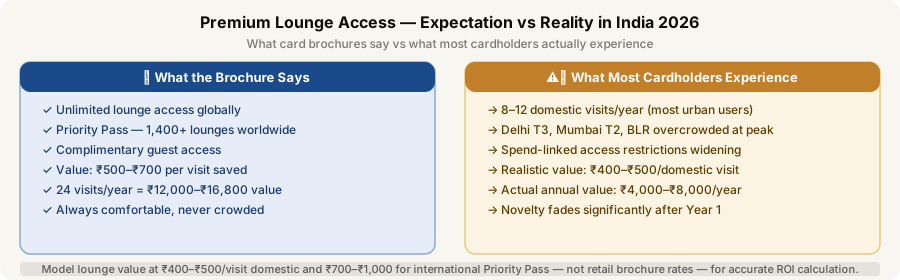 Fig 3: Premium lounge access — brochure vs reality. Most cardholders use 8–12 domestic lounges per year, not the "unlimited" headline. Model lounge value conservatively at ₹400–₹500/domestic visit for accurate ROI.
Premium Cards vs Mid-Tier Cards — Is the Upgrade Actually Worth It?
| Monthly Spend | Recommended Tier | Best Card |
|---|---|---|
| Below ₹75,000 | Cashback cards | Axis Bank Ace — 2% flat, ₹499 fee |
| ₹75,000–₹1,50,000 | Mid-tier travel | HDFC Regalia Gold — ₹2,500 fee, low forex, 12 lounges |
| ₹1,50,000–₹3,00,000 | Premium | HDFC Infinia Metal or HDFC Diners Black |
| ₹3,00,000–₹5,00,000 | Premium + | HDFC Infinia Metal — ROI is strongest at this range |
| ₹5,00,000+ | Ultra-premium | Amex Platinum — full benefit extraction justifies ₹60,000 fee |
The honest calculation: HDFC Regalia Gold at ₹2,500 delivers approximately ₹25,000–₹32,000 in annual value at ₹1.5L/month spend. HDFC Infinia Metal at ₹12,500 delivers approximately ₹60,000–₹80,000 at the same spend. The upgrade costs ₹10,000 more in fee and delivers ₹35,000–₹48,000 more in value — clearly worthwhile above ₹1.5L/month. Below that, Regalia Gold wins.
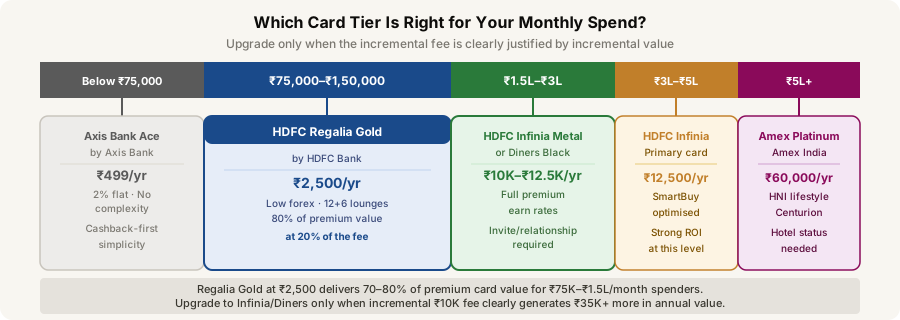 Fig 5: Which card tier is right for your monthly spend. The Regalia Gold band (₹75K–₹1.5L/month) is where most salaried Indian professionals should stay before considering premium cards.
Application Difficulty — How Hard Is Each Card to Get?
| Card | Difficulty | Key Requirement |
|---|---|---|
| HDFC Infinia Metal | ⛔ Extremely difficult | Invitation-only — requires HDFC Imperia/Private Banking relationship + ₹3L+/month income |
| HDFC Diners Club Black | 🟡 Moderate | ₹1,75,000/month income + strong CIBIL (750+) + existing HDFC relationship preferred |
| Axis Bank Magnus | 🟡 Moderate | ₹2,00,000/month income + 750+ CIBIL |
| Amex Platinum | 🟢 Easier than comparable cards | Income and lifestyle relationship-based — less rigid than HDFC Imperia requirement |
On HDFC Infinia specifically: "Invitation-only" is not marketing language — it is a real barrier. Infinia is extended to HDFC Imperia customers (typically ₹25L+ in deposits or investments with HDFC) or through selective bank manager recommendations. Applying through normal credit card channels will typically result in a downgrade to Regalia Gold or Regalia.
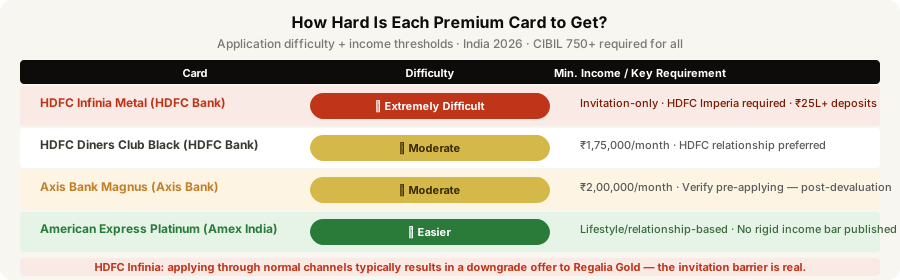 Fig 6: How hard each premium card is to get. HDFC Infinia Metal is genuinely invitation-only — not a marketing phrase. Standard applications are typically downgraded to Regalia Gold.
Best Alternatives If You Don't Qualify
HDFC Regalia Gold Credit Card by HDFC Bank — ₹2,500 fee, low forex markup, 12 domestic + 6 international lounges. For ₹1L–₹2L/month spenders.
IndusInd Bank Avios Visa Infinite by IndusInd Bank — ₹10,000 fee, 2 Avios/₹100, 1.8% forex. For Oneworld miles collectors.
Axis Bank Ace Credit Card by Axis Bank — ₹499 fee, 2% flat on everything. For users who want zero management overhead.
SBI Card Elite by SBI Card — ₹4,999 fee, 6 domestic lounges, 1.99% forex. For SBI relationship holders.
Cards That Are NOT Worth It in India 2026
Standard Chartered Ultimate Credit Card: ₹5,000 fee, 5 reward points per ₹150 at ₹0.25/point = 0.83% effective earn rate. Not competitive against HDFC Regalia Gold at ₹2,500 fee.
Kotak Royale Signature: Marketed as premium but reward earn rate and redemption options are significantly below HDFC and Axis equivalents at the same fee level. Not recommended.
Frequently Asked Questions
The HDFC Infinia Metal Credit Card by HDFC Bank is the best premium credit card in India in 2026 — ₹1/point via SmartBuy, 3.33% effective earn rate on a broad range of categories, unlimited global Priority Pass. However, it requires an HDFC Imperia/Private Banking relationship and is largely invitation-only. Verify current reward exclusions on the official HDFC Bank MITC.
Yes — for monthly spends above ₹1.5–₹2 lakh with an existing HDFC Bank relationship. At ₹3L/month, the card generates approximately ₹1.57 lakh in annual value (rewards + lounge + memberships) on ₹12,500 fee — a 12.6x ROI. Below ₹1.5L/month, the HDFC Regalia Gold Credit Card delivers better value-to-fee ratio.
For unlimited global lounge access including Centurion lounges: American Express Platinum by Amex India. For unlimited Priority Pass globally: HDFC Infinia Metal by HDFC Bank. For unlimited access including 4 guest visits: Axis Bank Magnus by Axis Bank — though the card has been significantly devalued in 2023–26. Verify current lounge spend conditions on each card's MITC.
Only above ₹1.5–₹2L/month spend where the break-even calculation works. Below this, the HDFC Regalia Gold Credit Card at ₹2,500 delivers 70–80% of premium card value at 20% of the fee. The biggest risk in 2026 is devaluation — always verify current benefits before applying.
HDFC Diners Club Black: ₹1,75,000/month. Axis Bank Magnus: ₹2,00,000/month. HDFC Infinia Metal: ₹3,00,000+/month (plus HDFC Imperia relationship). Amex Platinum: relationship-based, no published income threshold. Actual approval depends on CIBIL score (750+) and existing banking relationship.
HDFC Infinia Metal requires an HDFC Bank Imperia or Private Banking relationship — typically requiring ₹25L+ in deposits, investments, or assets managed through HDFC. Some customers receive invitations through HDFC Bank managers. Applying without this relationship will generally result in a downgrade offer to Regalia or Regalia Gold.
You have several options: (1) Contact the bank to request a fee waiver or downgrade to a no-fee variant — some banks grant this when benefits are materially reduced. (2) Evaluate whether the card still crosses break-even at current benefits; if not, cancel before the next annual fee cycle. (3) Switch to an alternative — the Axis Bank Magnus devaluation of 2024–26 is the clearest recent example of why cardholders should re-evaluate annually rather than holding indefinitely.